

Which Vitamin Deficiency Causes Hair Fall?
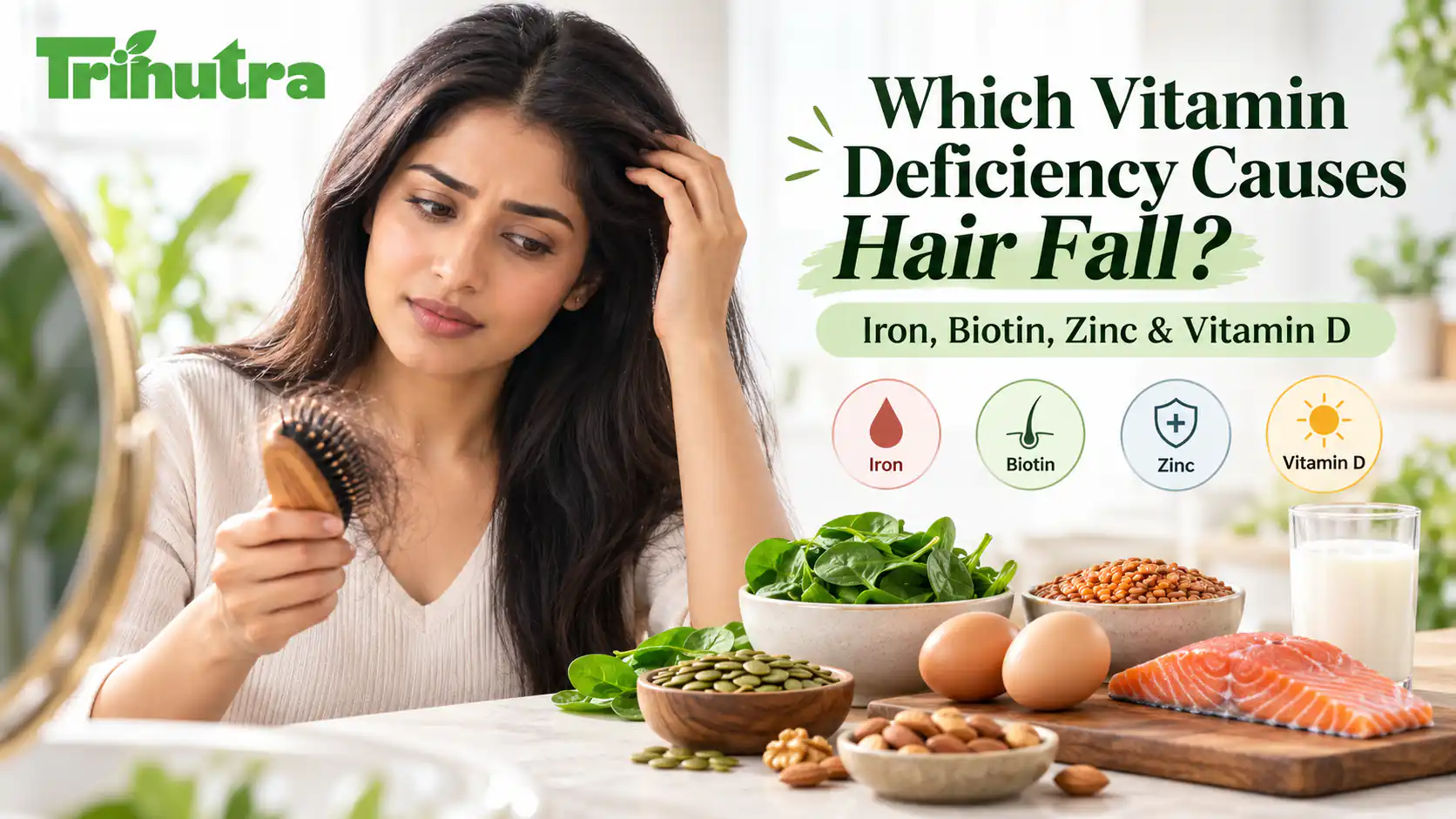
Vitamin D and iron deficiency are among the nutritional gaps associated with increased hair shedding. In a 2024 Pakistani study of 120 people with diffuse hair fall, 79.17% had vitamin D deficiency, highlighting the importance of checking deficiencies before taking supplements.
Why Do Nutrient Deficiencies Lead to Hair Loss?
Your hair follicles are some of the most active cells in your body, which means they need a steady supply of nutrients to keep growing. When your body doesn't get enough of certain vitamins or minerals, it starts prioritizing vital organs over hair growth. That's when you notice more shedding, thinner strands, and slower regrowth.
The nutrients most commonly linked to hair fall include, vitamin D, vitamin B12, zinc, and biotin. Each one plays a different role in keeping your hair growth cycle on track, so it helps to understand them individually.
Common Nutrient Deficiencies Linked to Hair Fall
Biotin deficiency hair loss: Biotin (vitamin B7) helps your body produce keratin, the main protein that makes up your hair strands. A true biotin deficiency is fairly rare, but when it happens, hair often becomes weak and brittle before it starts falling out more than usual.
Iron deficiency hair fall: This is one of the most common causes of hair fall, especially among women.Iron helps your body carry oxygen to your cells, including your hair follicles, and when your iron levels drop, your follicles shift into a resting phase, leading to increased shedding. Women with heavy periods, pregnant women, and vegetarians tend to be more prone to this.
Zinc deficiency hair: Zinc supports tissue growth and repair, including the tissue in your hair follicles. Low zinc levels can weaken the hair root, making strands fall out faster than they should.
Vitamin D deficiency and hair loss: Vitamin D helps activate hair follicles and keeps them cycling properly between growth and rest phases. Low vitamin D is often seen in people dealing with excessive shedding, so if you're asking "does vitamin D deficiency cause hair loss," the short answer is yes, it can be a contributing factor.
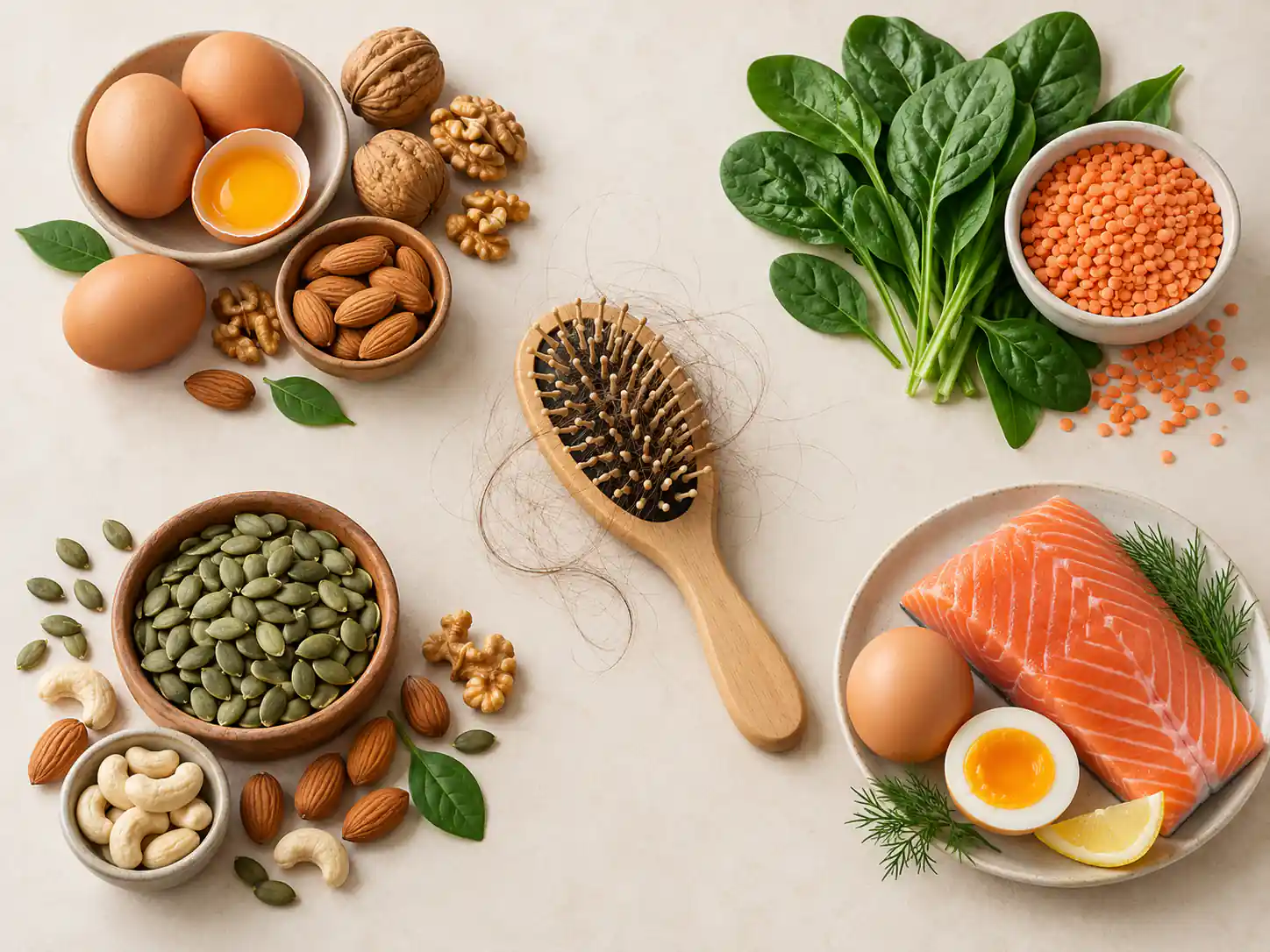
Deficiency Comparison Table
|
Nutrient |
Role in Hair Health |
Common Signs |
Natural Food Sources |
|
Biotin |
Supports keratin production |
Brittle strands, thinning |
Eggs, nuts, seeds |
|
Iron |
Carries oxygen to hair follicles |
Fatigue, pale skin, excess shedding |
Red meat, spinach, lentils |
|
Zinc |
Repairs and strengthens hair tissue |
Slow growth, dry scalp |
Chickpeas, pumpkin seeds, dairy |
|
Vitamin D |
Activates hair follicles |
Diffuse thinning, fatigue |
Sunlight, fortified milk, fatty fish |
Every one of these nutrients works together, so a gap in just one area can still affect your overall hair health.
How Do You Know If a Deficiency Is Behind Your Hair Fall?
Vitamin-related hair fall usually shows up as diffuse shedding, meaning hair thins out evenly across your scalp rather than in one specific patch or receding line. If you're also feeling tired, dizzy, or noticing pale skin along with the shedding, it's worth getting a blood test done rather than guessing. A simple panel can check your iron, vitamin D, and B12 levels so you know exactly what your body needs.
Supporting Your Hair From Within
Once you know your diet might be missing key nutrients, the next step is filling that gap consistently, since food alone doesn't always cover it, especially with busy routines common in Pakistan. This is where a well-formulated supplement can help. Using Trinutra's Biotin & Collagen Inforec E can help support your hair's natural growth cycle and reduce nutrient-related hair fall over time, since it combines biotin with collagen to nourish hair from the root. If you've been relying on oils and shampoos alone, it might be time to also feed your hair from the inside. You can browse Trinutra's full hair care range to find what fits your routine best.

Simple Habits to Reduce Nutrient-Related Hair Fall
-
Add iron-rich foods like spinach, lentils, and red meat to your daily meals
-
Get a little sunlight each day to support your natural vitamin D levels
-
Include zinc-rich foods such as pumpkin seeds and chickpeas in your diet
-
Stay consistent with a hair supplement instead of switching products every few weeks
-
Avoid crash diets, since sudden calorie cuts often trigger nutrient-related shedding
Trinutra's approach focuses on giving your body real, absorbable nutrition rather than quick fixes, which matters when you're dealing with something as gradual as hair growth.
Closing Words
Hair fall linked to a vitamin deficiency is common, but it's also one of the more manageable causes once you identify what your body is missing. Small, consistent changes to your diet, along with the right supplement, can make a real difference over a few months. This blog is for general awareness only, so please consult a healthcare provider before starting any new supplement, especially if your hair fall is sudden or severe.
If you'd like to explore more, feel free to visit our website and check out Trinutra range of hair, skin, and nails supplements.
FAQs
Which vitamin deficiency causes hair fall the most?
Iron deficiency is one of the most common causes, especially in women, followed closely by low vitamin D and biotin levels.
Does vitamin D deficiency cause hair loss?
Yes, low vitamin D can affect how your hair follicles cycle through growth and rest phases, leading to increased shedding over time.
Can hair grow back after fixing a vitamin deficiency?
In most cases, yes. Once nutrient levels are restored, hair fall linked to deficiency often slows down, though regrowth takes a few months to become visible.
Is biotin deficiency common in Pakistan?
A true biotin deficiency is rare, but many people still benefit from biotin supplementation due to poor diet, stress, or seasonal hair fall.
How can I check which vitamin I'm deficient in?
A basic blood test covering iron, vitamin D, B12, and zinc levels is the most reliable way to find out.
Does zinc deficiency really affect hair?
Yes, zinc plays a role in tissue repair, and low levels can weaken hair roots, leading to more noticeable shedding.
Can I take a hair supplement without a blood test?
Many people take general hair, skin, and nails supplements safely, but if your hair fall is severe or sudden, it's best to consult a doctor before starting anything.
Experience Authentic Wellness
Browse Trinutra's full catalog of 100% halal, cold-extracted herbal formulas with Cash on Delivery nationwide across Pakistan.