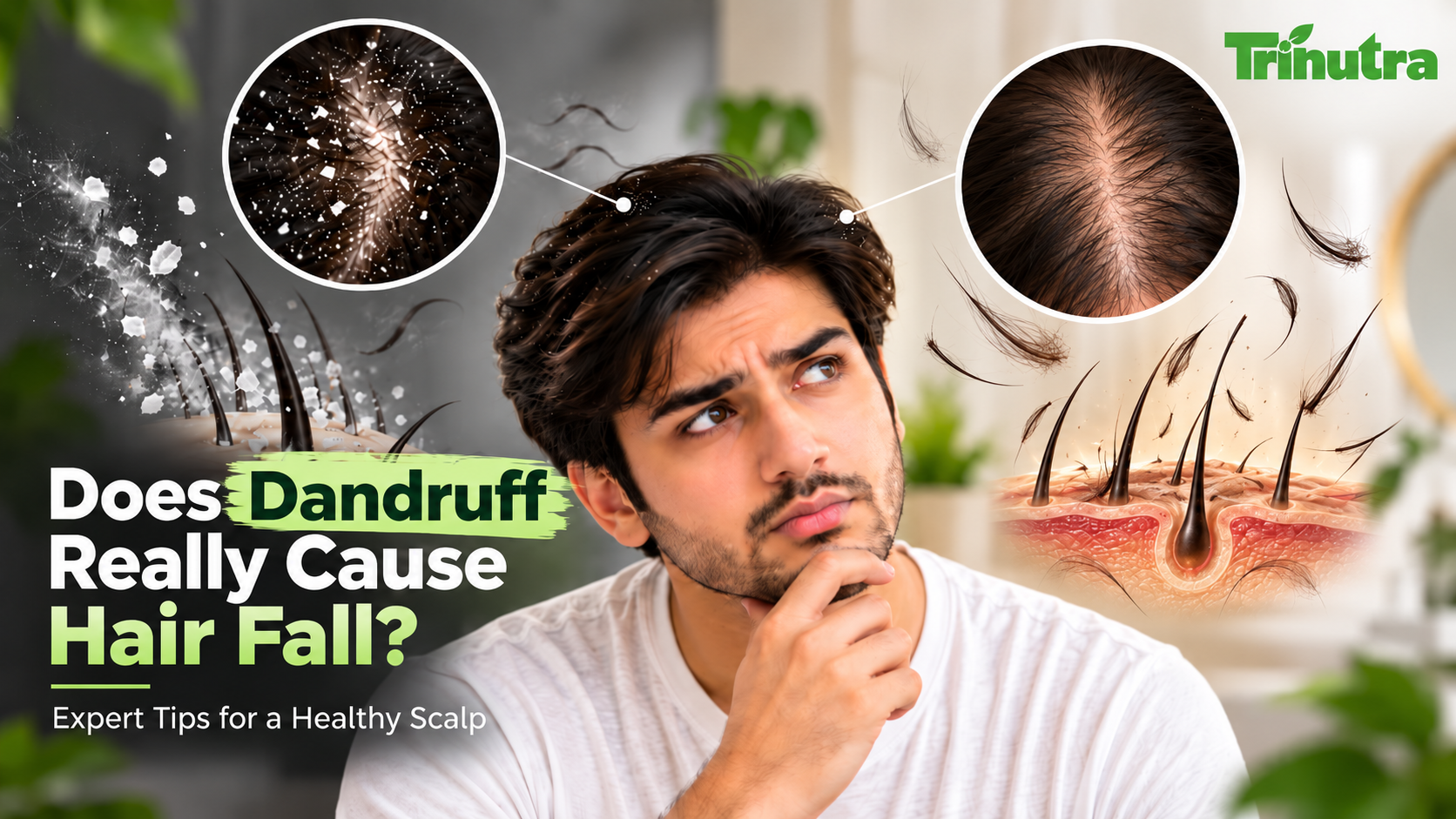
Does Dandruff Cause Hair Fall? Expert Tips for a Healthy Scalp
Yes, dandruff can contribute to increased hair shedding, mainly because scalp inflammation and itching can weaken the scalp environment and lead to excessive scratching. A study of 150 men found that anti-dandruff treatment reduced hair shedding by 10–17% over 6 months. Let's break down the real connection between dandruff and hair fall, in simple words, without the confusing medical jargon. What Exactly Is Dandruff? Dandruff happens when your scalp sheds dead skin cells faster than normal. You'll notice white or yellowish flakes on your scalp, hair, and clothes, often paired with itching, redness, or an oily feeling. A yeast-like fungus called Malassezia naturally lives on everyone's scalp, but in some people, it grows out of control and speeds up skin turnover. Add in dry weather, oily scalp, stress, or harsh shampoos, and dandruff shows up pretty quickly. Does Dandruff Cause Hair Fall? The Honest Answer Here's the truth: dandruff doesn't directly pull hair out of your scalp. But it creates the perfect environment for hair fall to happen. Think of it this way, dandruff itself is like a symptom, not the root disease. The real damage comes from what dandruff triggers: Scalp inflammation – When your scalp stays irritated for a long time, it disturbs the natural hair growth cycle and weakens hair roots. Constant scratching – Dandruff makes your scalp itchy, and scratching damages hair follicles and breaks hair strands. Clogged follicles – Excess oil and flakes can block hair follicles, making it harder for healthy hair to grow. Weakened hair shaft – Inflammation and dryness make hair brittle, so it snaps off more easily during combing or washing. So while dandruff isn't the direct cause of baldness, ignoring it for too long can absolutely speed up hair fall and thinning. Why Hair Fall Occurs: It's Not Always Just Dandruff Before you blame every strand of hair loss on dandruff, it helps to understand that hair fall usually comes from a mix of causes. Genetics, diet, hormonal changes, stress, and scalp health all play a part together. In Pakistan, poor water quality, seasonal humidity, and iron or vitamin deficiencies are common culprits too. That's why treating dandruff alone sometimes isn't enough if your diet is already missing key nutrients your hair needs to stay strong. How to Control Hair Fall Caused by Dandruff Getting your scalp back on track doesn't need to be complicated. Here's what actually helps: Use a proper anti-dandruff shampoo – Look for ingredients like ketoconazole, zinc pyrithione, or salicylic acid, and don't switch shampoos too often. Don't scratch, tap gently instead – Scratching feels satisfying for a second but damages your follicles long-term. Keep your scalp clean, not stripped – Wash regularly, but avoid over-washing, which dries out your scalp and makes flaking worse. Manage stress levels – Stress hormones can trigger both dandruff and hair shedding, so sleep and relaxation matter more than people think. Support your hair from the inside too – Topical treatment handles the surface, but your body also needs the right nutrients to rebuild healthy hair. This is where nutrition quietly becomes just as important as your shampoo routine. Your scalp and hair follicles need biotin, collagen, and other building blocks to stay strong, and if your diet is lacking, no shampoo alone can fully fix the problem. This is exactly why many people in Pakistan turn to a good hair supplement alongside their topical scalp care. If you're dealing with ongoing thinning or breakage, using Trinutra's Hair, Skin & Nails (Biotin & Collagen Enforcer E) can help support hair growth and reduce hair fall over time, working from within while your anti-dandruff routine handles the scalp itself. If you'd like to check it out, you can look at Biotin & Collagen on our website. Dandruff-Related Hair Fall vs Other Types of Hair Loss It helps to know the difference between temporary shedding caused by dandruff and other more stubborn types of hair loss, so you don't waste time treating the wrong problem. Type of Hair Fall Main Cause Is It Reversible? Typical Signs Dandruff-related hair fall Scalp inflammation, scratching, clogged follicles Usually yes, with proper scalp care Flakes, itching, thinning at the crown or temples Seasonal/telogen effluvium Stress, illness, weather change Usually yes, resolves in a few months Sudden increase in shedding, no bald patches Nutritional deficiency hair fall Low iron, biotin, protein, or vitamin D Yes, with diet and supplementation Weak, brittle hair, slow growth Androgenetic (pattern) hair loss Genetics, hormones Manageable, not fully reversible Gradual thinning, receding hairline If your hair fall matches the dandruff-related pattern, the good news is it's very manageable once you sort out your scalp health. Scalp Health Tips for Better Hair Days A healthy scalp is basically the soil your hair grows from, so it deserves more attention than most people give it. Massage your scalp gently while washing to improve blood flow. Avoid tying wet hair tightly right after a shower. Choose a sulfate-free shampoo if your scalp feels dry after washing. Change your pillowcase often, since oil and flakes build up there too. Stay hydrated, since dry skin (including your scalp) worsens flaking. Small daily habits like these add up over a few weeks, and you'll usually start noticing calmer, flake-free skin along with less hair on your pillow. When Should You See a Dermatologist? Most dandruff cases respond well to over-the-counter shampoos and lifestyle changes within a few weeks. But if you notice bald patches, severe redness, pus-filled bumps, or hair fall that just doesn't slow down despite trying everything, it's time to see a dermatologist. Persistent dandruff combined with heavy shedding can sometimes point to conditions like seborrheic dermatitis or scalp psoriasis, which need proper medical evaluation rather than home remedies alone. CLOSING WORDS Dandruff and hair fall are closely connected, even if one doesn't directly cause the other. The real fix comes from treating your scalp gently, staying consistent with the right shampoo, and giving your body the nutrients it needs to keep hair strong from the roots up. Everyone's scalp and hair fall pattern is a little different, so if things don't improve after a few weeks, it's always a good idea to consult a healthcare provider or dermatologist for personalized advice. If you'd like to explore more haircare and wellness solutions, feel free to visit our website and check out what Trinutra has to offer.For more haircare and wellness solutions, visit Trinutra and explore products designed to support your everyday health and haircare needs. FAQs Does dandruff really cause permanent hair loss? No, dandruff on its own doesn't cause permanent baldness. It can contribute to temporary thinning and shedding if left untreated, but hair usually grows back once the scalp heals. Why does my hair fall increase in winter in Pakistan? Cold, dry air pulls moisture from your scalp, which often triggers more flaking and dryness, leading to more noticeable shedding during winter months. Can oiling your hair reduce dandruff and hair fall? Light oiling can soothe a dry scalp, but heavy oiling (especially if left on too long) can clog follicles and actually worsen dandruff for some people. Balance is key. Is dandruff contagious? No, dandruff is not contagious. It's related to your individual scalp's oil production, yeast levels, and sensitivity, not something you catch from someone else. Which foods help control hair fall and dandruff naturally? Foods rich in zinc, omega-3, protein, and biotin, like eggs, fish, nuts, and leafy greens, support scalp health and stronger hair growth from within. Can stress alone cause dandruff and hair fall together? Yes, high stress levels can disturb your scalp's oil balance and trigger hair shedding, which is why managing stress is part of a real long-term solution. How long does it take to see results after starting dandruff treatment? Most people notice reduced flaking within 2-4 weeks of consistent anti-dandruff shampoo use, while visible improvement in hair fall usually takes 8-12 weeks since hair growth is a slower cycle.